

Strategy is changing.
The ‘traditional’ approach to strategic planning is no longer fit for purpose: the uncertainties about the future and realising just how quickly and radically things can change have shaken organisations’ faith in relying on 3-5 year plans to map out their future.
They need a more dynamic approach to strategy, a different way of thinking about the future, and the adaptability and agility to be able to respond quickly as challenges and opportunities develop. Strategy is an ongoing journey, not a one-off project.
Developing such a dynamic and ongoing approach to strategy requires a shift in focus to strengthening the organisation’s strategy capabilities, ensuring it is well-prepared to be able to respond, adapt, survive and thrive as the uncertainties of the future unfold.
There are three key aspects to consider in developing a more dynamic approach to strategy:-
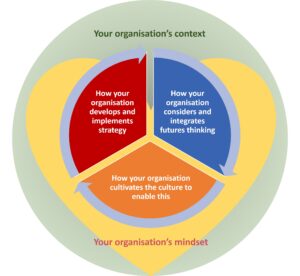
How strategy ‘flows’ in your organisation
How your organisation thinks about the future
How your organisational culture enables and supports this
The context in which your organisation operates – or could operate – affects what might be appropriate for these; and the mindset (the beliefs and values) within the organisation influence its approach to strategy.
To develop a more dynamic ongoing approach to strategy there are some crucial questions that each organisation needs to answer:-
What are the strategy capabilities you need to consider?
How might your organisation need to strengthen these?
How do you start the conversation in your organisation?
This ‘Strategy capabilities for uncertain futures‘ workbook contains 30 questions to help you think about these points. Each question is designed for exploration, as a basis for deeper consideration and to stimulate ‘rich conversations’ about your organisation’s context and what might be right for it now (every organisation is different, and needs to develop its own approach to strategy and how it thinks about the future).
This is a framework to help you start thinking and exploring and discussing, a platform to help organisations consider how they might strengthen their strategy capabilities from an organisation-wide perspective. There are no right or wrong answers – and no instantly-generated report showing scores or comparisons! – it provides a framework to help guide your thinking and conversations, a starting point to build on.
The richness of these conversations is key, exploring openly and with depth to consider your organisation’s current approach to its strategy work and how it might need to strengthen its strategy capabilities. These first stages of the journey need care and thought, facilitating and guiding the conversations and collective exploration, then deciding on what will change and how to go about this.
The workbook is available as a free resource for you to use to consider how your organisation ‘does strategy’, and to share with your colleagues: starting the conversation about this is often the most difficult step, and these questions are designed to help stimulate the discussion.
Fill in the form below to obtain a copy, and contact me if you would like help exploring the questions and guiding and facilitating the conversations that will follow.